Craniosacral Therapy


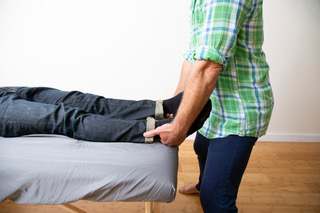
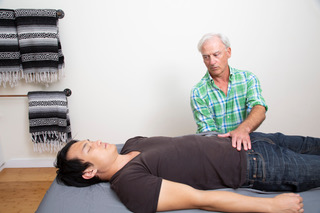
Craniosacral (CST) is a gentle, hands-on method of evaluating and enhancing the functioning of the craniosacral system – comprised of the membranes and cerebrospinal fluid that surround and protect the brain and spinal cord.
How does Craniosacral Therapy work?
Like the pulse of the cardiovascular system, the craniosacral system has a rhythm that can be felt throughout the body. Using a touch generally no heavier than the weight of a nickel, skilled practitioners can monitor this rhythm at key body points to pinpoint the source of an obstruction or stress. Once a source has been determined, they can assist the natural movement of the fluid and related soft tissue to help the body self-correct.
What conditions can Craniosacral Therapy help?
Because of its influence on the functioning of the central nervous system, Craniosacral Therapy can benefit the body in a number of ways — from bolstering overall health and resistance to disease to alleviating a wide range of specific medical conditions.
Among CST’s largest patient groups are those suffering chronic symptoms that haven’t been aided by other approaches. In particular, CST is beneficial to those with head, neck or back injuries resulting from an accident. The extremely light touch involved in the application of CST makes it a safe approach as well for children, infants and newborns
Another area of principal effectiveness is with stress-related dysfunctions. Insomnia, fatigue, headaches, poor digestion, anxiety and temporomandibular joint (TMJ) dysfunction are just a few examples. Craniosacral Therapy works to reverse the debilitating effects of stress by providing the conditions in which the nervous system can rest and rejuvenate.
Some of the conditions I have treated with CST:
- Migraines and chronic headaches
- Temporomandibular Joint Dysfunction (TMJ)
- Post Traumatic Stress Disorder
- Stress and tension–related problems
- Brain surgery
- Colon cancer
- Bells Palsy
- Meniere’s Disease
- Parkinson’s Disease
- Pregnancy
- Endometriosis
- Throat cancer
Is there any condition for which CST shouldn’t be used?
There are certain situations where application of CST would not be recommended. These include conditions where a variation and/or slight increase in intracranial pressure would cause instability. Acute aneurysm, cerebral hemorrhage or other preexisting severe bleeding disorders are examples of conditions that could be affected by small intracranial pressure changes.
How many Craniosacral Therapy sessions will I need?
Response to CST varies from individual to individual and condition to condition. Your response is uniquely your own and can’t be compared to anyone else’s — even those cases that may appear to be similar to your own. The number of sessions needed varies widely — from just one up to three or more a week over the course of several weeks.
Why I do CST
As I began to do massage work with certain people I would be drawn to a very quiet place that would often erupt into a sea of emotion and tears. My surprise was not that it was happening but that I could hold and nurture the space for these emotions to take place. These experiences not only strengthened my belief and conviction in the power of the human touch but also opened up for me a whole new approach for utilizing light touch.
I also love the anatomical precision this work requires. To insure a successful treatment it is extremely important not only to be able to feel the energy but the exact location of the restriction. Knowing the anatomy of the internal structures of the body is key to palpating and releasing the restriction.
“The body is in a state of organized dysfunction. We disorganize it and ask it to change and reorganize more functionally”.
ENERGY CYST:
I am also trained in Visceral Manipulation, which I often use during a CST session. Visceral manipulation focuses on problems associated with the body’s viscera (internal organs such as the heart, liver, intestines) and their connective tissues. It helps dissipate the effects of both physical and emotional stress and enhances general health and resistance to disease.